October 17, 2026
How Much Is an X-Ray ,CT Scan, Ultrasound Without Insurance
When a doctor tells you that you need an X-Ray, CT Scan, or ultrasound, if you don't have insurance, your first questions might be: How much is an X-ray without insurance? How much is a CT scan without insurance? How much is an ultrasound without insurance? Instead of thinking about your health first, you immediately start thinking about costs. Of course, that is a valid concern, but your health comes first, and if you are uninsured, you have many options to reduce your out of pocket costs.
 Medical imaging is one of those areas in healthcare pricing that is quite murky because it differs so much depending on where you have your imaging done and who does it. A procedure that costs $300 at an independent clinic down the street might be billed at $4,500 by a hospital across town for the exact same scan, interpreted by the exact same group of board-certified radiologists.
If you've wondered: how much is a CT scan without insurance? or how much is an ultrasound without insurance? you should know that the costs vary, but you have solutions to make those scans affordable to you. In this guide, you're going to learn about the options for affordable medical imaging that can make your X-rays, CT scans, and ultrasounds easier on your budget. By understanding how medical billing works, leveraging non-traditional coverage models, and knowing where and how to shop for care, you can secure affordable diagnostics safely and effectively.
Why Is Medical Imaging So Expensive Out-of-Pocket?
To understand how to get affordable imaging, it helps to understand why the sticker price is so inflated in the first place. When hospitals bill insurance companies, they use an internal price list known as a "chargemaster." These chargemaster rates are artificially elevated to serve as an anchor point for negotiations with commercial insurers. Insurers never pay these rates; they negotiate substantial discounts.
However, if you walk in without insurance and do not ask questions, the billing department often defaults to charging you that raw chargemaster rate.
The Two Bills: Technical Fee vs. Professional Fee
Your scan costs are composed of two parts. The first part is the technical fee, which covers the cost of operating the equipment, the physical space, and the technician who conducts the scan. The second part of the scan fee for X-rays, CT scans, and ultrasounds covers the licensed physician who analyzes your images and writes the official report for your ordering doctor.
So when you are researching costs for scans, make sure to ask for the global fee that includes both the technical fee and the physician fee.
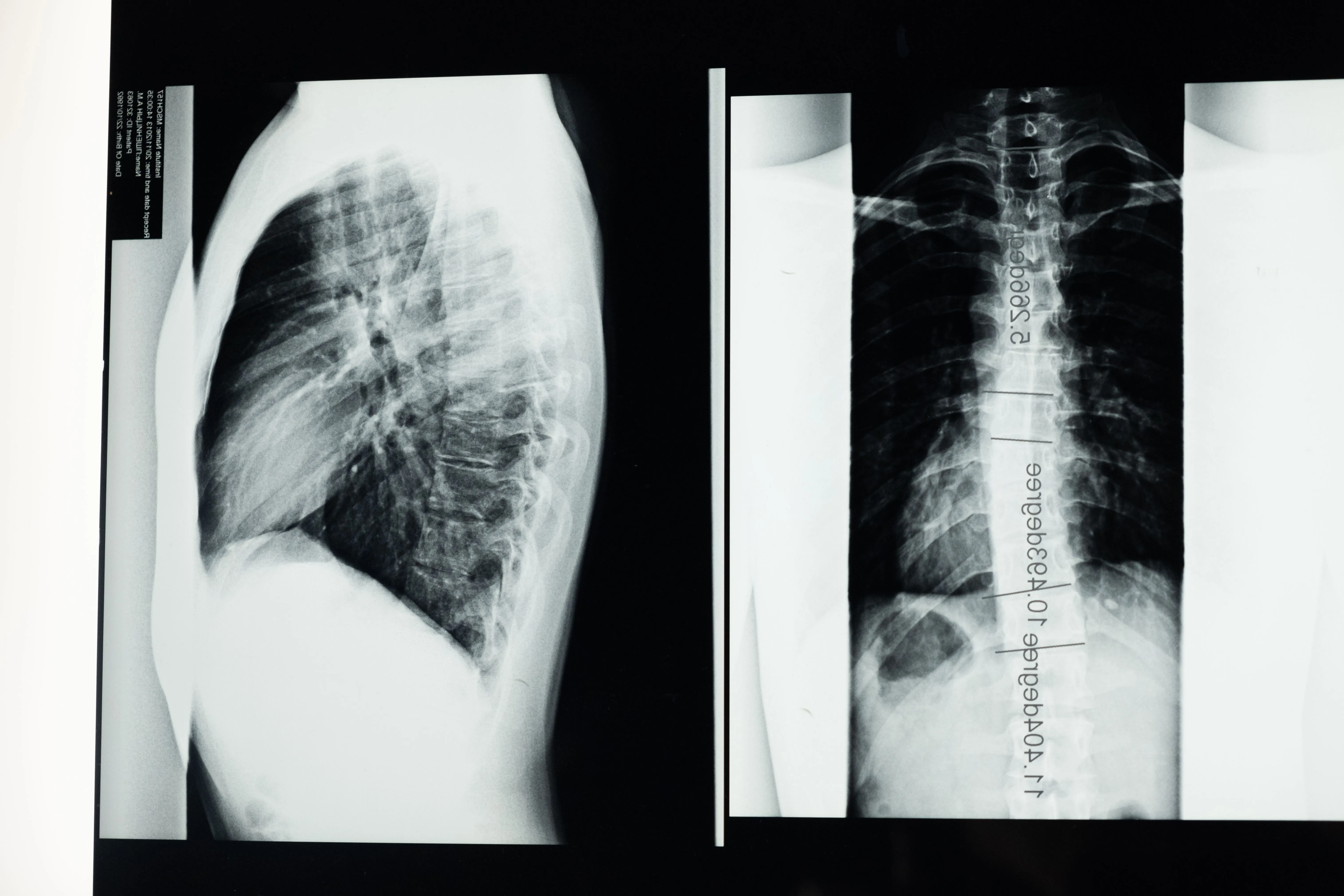 Average Out-of-Pocket Costs for Common Scans
Once you learn about the fair market price for various scans, it gives you the knowledge to be able to identify if the price a clinic is providing you is fair. And the knowledge also gives you the ability to then negotiate if you believe the pricing is not fair.
X-Ray Cost Without Insurance
An X-ray without insurance typically costs around $200. However, this price can differ based on geographical location, type of facility, and whether it's full-body or localized. Factors such as the area’s living costs and local practice pricing strategies play a crucial role in determining the final price.
A standard X-Ray cost without insurance typically ranges from $40 to $150 per view at an independent clinic or urgent care center, compared to $300 to $1,000+ at a hospital emergency room or hospital outpatient department.
Because X-rays are two-dimensional and use minimal radiation technology, they are among the least expensive scans. If you need a cheap X-Ray for a suspected fracture, sprain, or chest examination, you have many options like walk-in urgent care clinics and community radiology centers with prices going as low as $80.
Ultrasound Without Insurance Costs
An ultrasound cost without insurance will vary depending on where you have your ultrasound done. If you're paying out of pocket at a specialized imaging center, the costs can fall between $150 and $450. If you go to a hospital, the cost for an ultrasound without insurance can be higher, ranging between $800 and $2,500.
Ultrasounds use high-frequency sound waves to generate real-time soft tissue images, making them safe and radiation-free for pelvic, abdominal, vascular, and thyroid evaluations. To find a cheap ultrasound, you can also look at outpatient women's health clinics and standalone ultrasound centers as well as vascular or musculoskeletal clinics that offer dedicated self-pay ultrasound menus.
 ### CT Scan Cost Without Insurance
If you're wondering how much a CT scan is without insurance, the typical self-pay price for a CT scan ranges from $1,000 to $2,000. Several factors affect this price, including the complexity of the scan and the specific technology utilized. Additionally, patients should consider the potential for varying costs based on facility location and reputation. It’s advisable for patients to compare prices at different imaging centers and inquire about any financial assistance that may be available.
Then there can be additional fees, like if you need a CT scan with contrast. A CT scan with contrast means that the facility has to administer an iodinated dye, which typically adds $75–$200 to the baseline fee and may require a preliminary kidney function blood test (BUN/Creatinine).
MRI Cost Without Insurance
Magnetic Resonance Imaging (MRI) uses strong magnetic fields and radio waves to generate detailed images of organs, soft tissues, ligaments, and the central nervous system. An MRI cost without insurance averages $350 to $1,200 at an independent facility, compared to $2,000 to $8,500+ in a hospital setting. And if you need this scan with contrast, then an additional charge will be applied for the administration of a dye for the contrast.
Health Insurance Alternatives
Here's a quick side-by-side look at the main ways to reduce your out-of-pocket diagnostic costs.
Option | Typical Savings | Best For |
|---|---|---|
Health Subscription Services | 30% or more off negotiated rates | Uninsured patients who also want ongoing discounts on doctor visits, dental, and prescriptions |
Health Care Sharing Ministries | Members share costs instead of paying list price | Patients comfortable with a faith-based, non-insurance cost-sharing model |
Federally Qualified Health Centers | Sliding-fee scale tied to income | Low-income patients needing broad primary and diagnostic care |
Title X Family Planning Clinics | Sliding-scale fees based on verified income | Patients needing pelvic ultrasounds or reproductive health diagnostics |
National Breast and Cervical Cancer Early Detection Program | Free or low-cost diagnostic mammograms and ultrasounds | Low-income, uninsured, or underinsured women needing breast or cervical cancer screening |
County Health Departments & Public Hospital Districts | Nominal administrative fees | Residents of counties with safety-net hospital systems |
Health Subscription Services
Health subscription models like the one MedBlue offers can lower how much you have to pay for X-Rays, CT scans, MRIs, and ultrasounds. With a membership to a health subscription, you pay a flat monthly or annual fee that gives you discounts to a range of health services, including scans.
The subscription provider negotiates with health care providers to obtain discount pricing which they then give their subscribers. The pricing they negotiate provides discounts on health services that can range anywhere from 30% to far more.
A health subscription is typically not only for imaging scans, but rather it provides you with discounts on scans as well as other healthcare services like doctor visits, dental care, prescriptions, and telehealth. And so the cost you pay per month like in the case of MedBlue's $40 a month program, gives you access to imaging discounts as well as discounts on doctor visits, dentist visits, prescriptions, and telehealth.
Learn more about MedBlue's discount plan.
 ### Health Care Sharing Ministries
Health Care Sharing Ministries (HCSMs) are faith-based, non-profit organizations where members pool monthly share amounts to pay for one another's qualifying medical expenses, While health sharing plans are not regulated insurance products, they provide an established process for managing diagnostic costs. You pay a fixed monthly or annual cost to become a member of the HCSMs, and all funds are put into a pool. By joining the HCSM, you are able to access reduced costs for certain services like diagnostics. While minor healthcare concerns are not typically covered by the community pool, more serious issues can be covered.
Federally Qualified Health Centers
For affordable care supported by the US government, look at Federally Qualified Health Centers (FQHCs), which are community-based health clinics funded under Section 330 of the Public Health Service Act.
Section 330 is the federal grant program that provides funding to community health centers serving medically underserved areas and populations, in exchange for which those centers must meet federal standards on governance, quality, and access to care.
As a result, FQHCs are legally required to provide care to anyone, regardless of insurance status or ability to pay, using a sliding-fee discount scale tied to the Federal Poverty Guidelines (FPG). If an FQHC does not have an on-site MRI or CT machine, they maintain formal referral agreements with local hospital networks to provide diagnostics at reduced rates.
Title X Family Planning Clinics
 Title X is the federal grant program under the Public Health Service Act that funds family planning and reproductive health services for low-income patients; it is administered by the Office of Population Affairs within the U.S. Department of Health and Human Services.
For pelvic ultrasounds, breast examinations, and reproductive health diagnostics, Title X-funded clinics (such as Planned Parenthood and county health departments) offer sliding-scale fees based on your verified income.
National Breast and Cervical Cancer Early Detection Program
Administered by the CDC, the National Breast and Cervical Cancer Early Detection Program (NBCCEDP) provides low-income, uninsured, and underinsured women access to diagnostic mammograms, breast ultrasounds, and biopsies across all 50 states and U.S. territories.
The NBCCEDP was established under the Breast and Cervical Cancer Mortality Prevention Act of 1990 and is funded and overseen directly by the CDC, which also sets its income and insurance-status eligibility rules. Current program details and state-by-state contacts are published by the CDC.
County Health Departments & Public Hospital Districts
Most major metropolitan counties operate safety-net hospital systems funded by local tax revenue. By applying for county medical assistance programs, uninsured residents can access full diagnostic suites for nominal administrative fees.
What You Can Do to Reduce Your Costs
If you must arrange an imaging appointment independently, there are a variety of things you can do to make sure you get the best price.
Get a CPT Code
Always get the exact CPT code from your doctor for the scan, and then use that code when you call around for pricing. That code specifies the area being scanned, and costs for regions differ.
Call Independent Clinics
In addition, independent outpatient clinics often offer better pricing for X-Rays, CT scans, ultrasounds, and MRIs than hospitals. So when you are making your calls to check for pricing, make sure to call independent clinics as well.
Ask for Self-Pay Discounts
Also ask specifically about self-pay imaging discounts, as many facilities offer them. If you are in need of financial assistance due to your income, there are many federal agencies that are required to provide you with access to healthcare at minimal costs, so make sure to check your community healthcare provider to find out what options are available to you.
Make Sure the Clinic is ACR Accredited
If you are booking independently, also make sure that the facility you are booking with is American College of Radiology (ACR) accredited as they have standard pricing frameworks they follow.
And always make sure to get copies of your images from them before you leave the clinic.
How MedBlue Plans Offer Affordable Imaging
Medblue provides various healthcare solutions aimed at reducing out-of-pocket expenses for diagnostic tests like X-rays, CT scans, MRIs, and ultrasounds. The benefits include lower negotiated rates and access to a network of facilities that prioritize affordability. By utilizing MedBlue's plans, self-pay patients can gain access to essential imaging services at a fraction of the usual cost. You can review MedBlue discount pricing or connect with a MedBlue imaging specialist if you have questions.
FAQS
Here are some of the most frequently asked questions about how much it costs for X-rays, CT scans, ultrasounds, and MRI. If your question is not answered below, reach out to one of our MedBlue imaging specialists.
What is the difference between an MRI, CT scan, and X-ray?
An MRI, CT scan, and X-ray all do certain jobs in a better way. An X-Ray uses a small dose of ionizing radiation to produce two-dimensional images. It is fastest and best suited for evaluating bone fractures, joint dislocations, dental issues, and basic chest conditions.
A CT Scan combines multiple X-ray projections taken from different angles to construct cross-sectional 3D images. It provides rapid, detailed views of complex bone trauma, internal bleeding, blood clots, abdominal organs, and acute chest issues. An MRI uses strong magnetic fields and radiofrequency pulses (no radiation) to create high-resolution images of soft tissues, including the brain, spinal cord, ligaments, tendons, cartilage, and pelvic organs.
Why are medical scans significantly more expensive at hospitals compared to independent imaging centers?
Hospitals are huge facilities that cost a lot to run, so when you're paying for a procedure at a hospital, you're not just paying for the procedure itself, but also the overhead costs of the hospital. In addition to that, you also might end up paying chargemaster list rates, which are the rates that hospitals use to negotiate with insurance companies; they are high, and insurance companies always negotiate down. However, you as a self-pay patient can end up paying the full cost of those rates.
Independent imaging centers are less expensive to run, and so when you're paying that independent center, you're paying mostly for the procedure rather than the overhead of running the facility as you do with hospitals.
What is a "global fee," and why should self-pay patients always ask for one?
A global fee includes the two parts of medical imaging costs. Medical imaging costs include the technical part of the equipment used, facility, etc. It also includes the professional part of a radiologist interpreting the results. A global fee includes both parts of the cost, and so it is important for self-pay patients to ask for the global fee so they get the total cost, and not just one part of it.
Do I need a doctor’s referral or prescription to get an imaging scan in the US?
In most cases, you need a doctor's referral or prescription to get an imaging scan in the US. Because diagnostic imaging equipment involves medical radiation (X-rays, CT) or high-intensity magnetic fields (MRI), state and federal regulations require a valid order/prescription from a licensed medical provider (MD, DO, NP, or PA). The order must include the clinical indication and the specific anatomical area to be scanned.
There are exceptions, like routine annual screening mammograms (for women aged 40+) and certain preventive self-pay screenings (such as coronary calcium scoring or DEXA bone density scans in specific states), which may be scheduled directly via self-referral programs.
What is contrast material, and why does it require extra preparation?
Contrast materials are substances administered to highlight specific blood vessels, organs, inflammation, or tumors on the scan. Because IV contrast is cleared through the kidneys, patients with kidney disease, diabetes, or those over age 60 may require a preliminary blood test (BUN and Serum Creatinine) to check kidney function.
You may be instructed to fast (no food or drink) for 2 to 4 hours prior to a contrast-enhanced exam. You should always disclose any history of contrast allergies, asthma, or kidney conditions to the technologist beforehand.
What's the difference between a health subscription service and a health care sharing ministry?
A health subscription service, like MedBlue's plan, charges a flat monthly fee for pre-negotiated discounts on imaging, doctor visits, dental care, and prescriptions; it's a discount model, not an insurance product. A health care sharing ministry is a faith-based, non-profit arrangement where members pool monthly contributions to cover one another's qualifying medical expenses. Both can lower your imaging costs, but a subscription locks in a discount rate up front, while a sharing ministry depends on the community approving your specific expense.
How can I tell if the price I'm quoted for a scan is fair?
Ask your doctor for the exact CPT code, then call several independent clinics and hospitals using that code to compare quotes. Always request the global fee, which covers both the technical and professional components, and confirm the facility is ACR accredited, since accredited centers follow standard pricing frameworks that make comparisons easier.
Are there programs specifically for uninsured women who need breast or cervical cancer screening?
Yes. The National Breast and Cervical Cancer Early Detection Program (NBCCEDP), administered by the CDC, provides free or low-cost diagnostic mammograms, breast ultrasounds, and biopsies to low-income, uninsured, and underinsured women in all 50 states and U.S. territories.