October 17, 2026
Your Guide to Telehealth No Insurance Options
Telehealth no insurance options include health subscription services, healthcare ministries, and federally funded programs. That means, regardless of your insurance status, you can find a way to access telehealth for your medical needs and, with that, discover a more transparent, less expensive, and time-effective way of taking care of your health.
 If you wake up one morning with a painful earache or an unexplained rash, you know you need a doctor's help, but if you don't have insurance, the first thing you might think about is how much that help is going to cost you. And the second thing you might think about is how long it's going to take to get that help, with doctor's appointments often being booked up weeks in advance, and urgent care clinics requiring hours of waiting room time. Telehealth provides a solution to both of those concerns.
Virtual care, also known as telehealth, has undergone a metamorphosis in recent years. It is no longer an out-of-reach option, but instead it has turned into one of the most democratizing healthcare options available. And today, accessing a board-certified doctor online without insurance is not only possible; it is often faster, more transparent, and cheaper than walking into a brick-and-mortar clinic with an expensive insurance copay.
This comprehensive guide will demystify cash-pay telehealth. We will break down exactly how online visits work, what conditions virtual doctors can treat, realistic pricing benchmarks across top platforms, and practical strategies to ensure your appointments, lab tests, and prescriptions remain genuinely affordable.
 What is Telehealth Without Insurance?
So, let's start off with the basics. Telehealth is the practice of using digital tools to get healthcare support virtually. That support can come from a doctor, nurse, or other healthcare professional. You can use telehealth to speak to a healthcare professional about a healthcare issue or to get a prescription.
Of course, if testing is required, then your virtual visit will need to be followed up by a physical visit, but in certain cases, a virtual visit may be all that you need, coupled with a prescription, which a healthcare professional can issue and send directly to your local pharmacy.
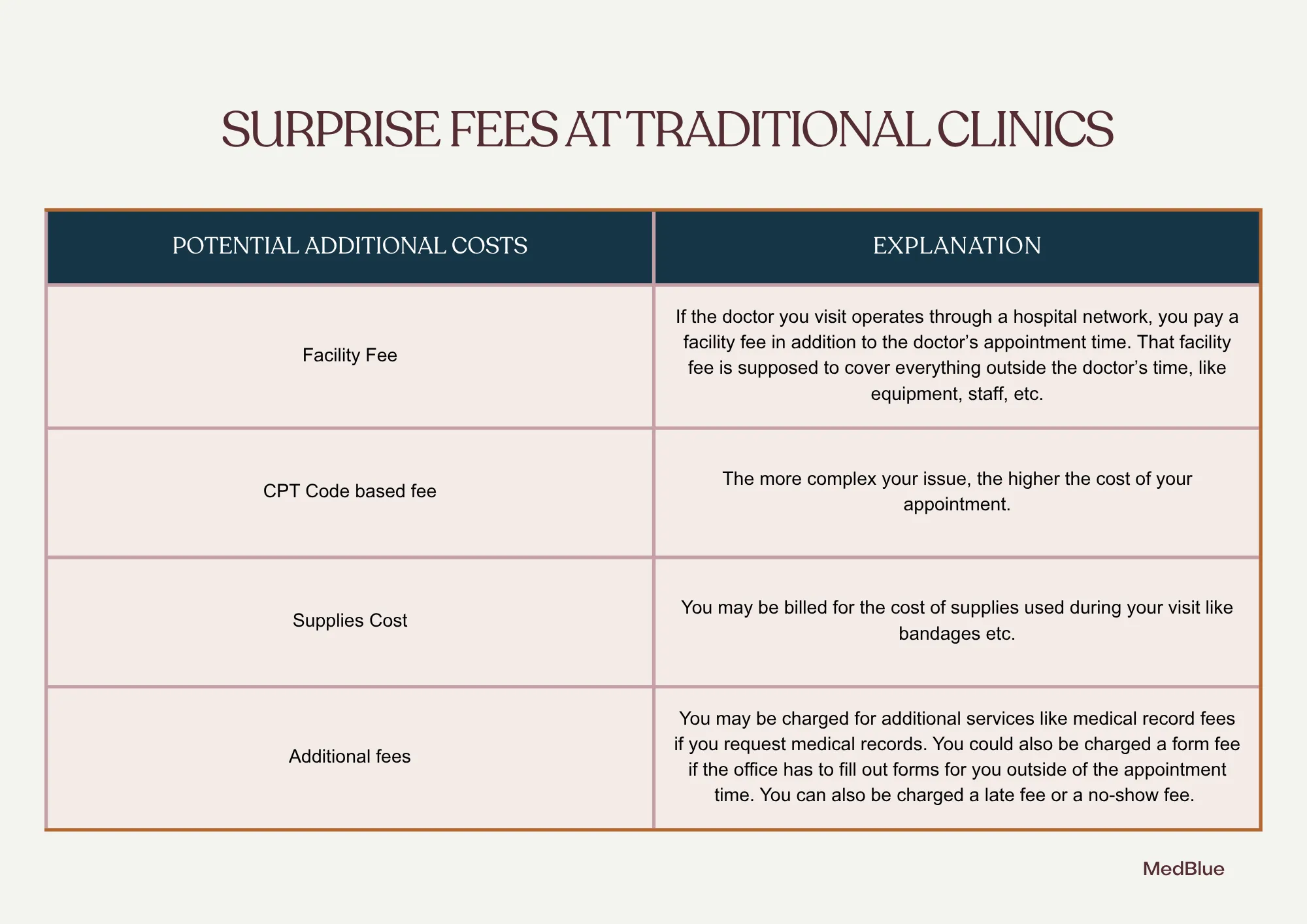
Using telehealth without insurance simply means that you must either pay out of pocket for the service or use insurance alternatives to help lower the cost of using the service. Navigating the traditional healthcare system without insurance can feel intimidating, primarily because conventional medical billing is unlike billing for almost anything else you purchase. There is no fixed list of prices, and sometimes the pricing you do receive can seem almost arbitrary. In addition, patients can be vulnerable to surprise facility fees, out-of-network provider surcharges, and confusing administrative bills months after an appointment.
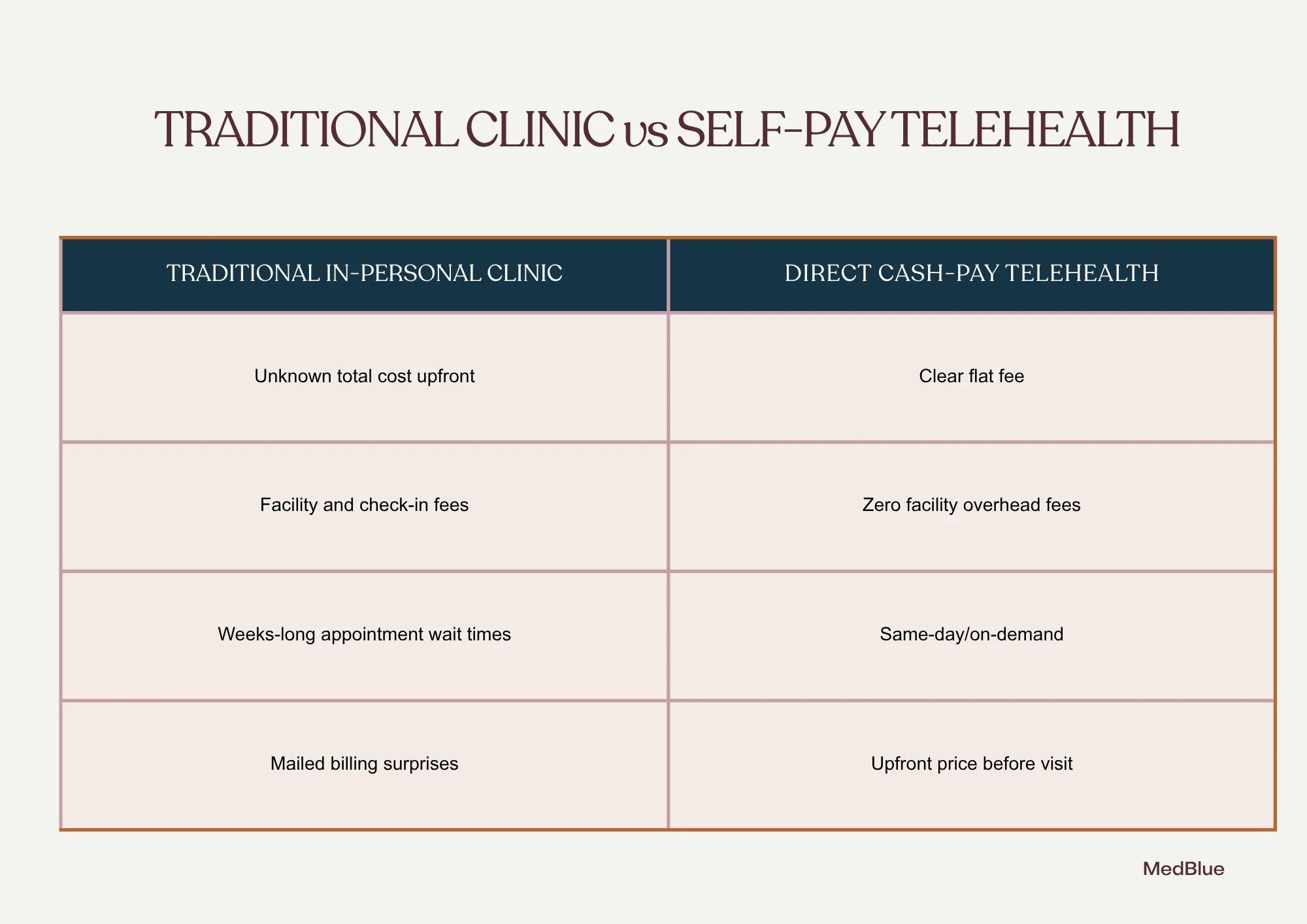 Direct-to-consumer cash-pay telehealth operates on a fundamentally different principle, with cost provided upfront, much like any other retail service you would pay for. You see the price of your consultation before you type in your credit card details or enter the virtual exam room. There are no claims adjusters, no pre-authorization hurdles, and no surprise invoices in the mail.
For example, a doctor's visit without insurance can be a fixed price of between $30 and $90 depending on your telehealth provider. If the provider lists a price of $45, then that is the total amount you pay for that visit. A doctor's visit in a doctor's office or clinic can be anywhere from $40 to $300 depending on the facility. In addition to the cost of your appointment, you may pay extra surcharges like facility fees.
Why Online Visits Are Often Cheaper Than Traditional Clinics
When you compare telehealth visits to traditional in-person visits, the cost difference appears striking. So why is it that there is such a disparity if you may get the same answer at the end of your visit whether you go to a telehealth doctor or an in-person one?
Lower Overhead
Traditional medical practices maintain physical offices, examination rooms, front-desk staff, utilities, and expensive medical equipment. Telehealth platforms eliminate the majority of these physical capital costs and pass those operational savings directly to patients.
No Insurance Billing Overhead
Processing insurance claims is expensive. A substantial portion of every dollar spent in traditional clinics goes toward billing specialists, claims coders, and administrative negotiations with insurance payers. By removing insurance from the transaction, direct cash-pay platforms eliminate administrative friction.
Flat-Rate, Market-Driven Pricing
When clinics compete openly for cash-paying patients, pricing becomes competitive and transparent. Providers publish clear flat fees, giving consumers the power to choose care that fits their budget.
How Is Telehealth Delivered?
Telehealth is generally delivered in two different ways, and each model is best for a different set of needs. The first method is called synchronous care, which is delivered via video or telephone in real time. The second method is the cheapest telehealth no insurance option and it is called asynchronous care.
Telehealth in Real-Time Over Video and Phone
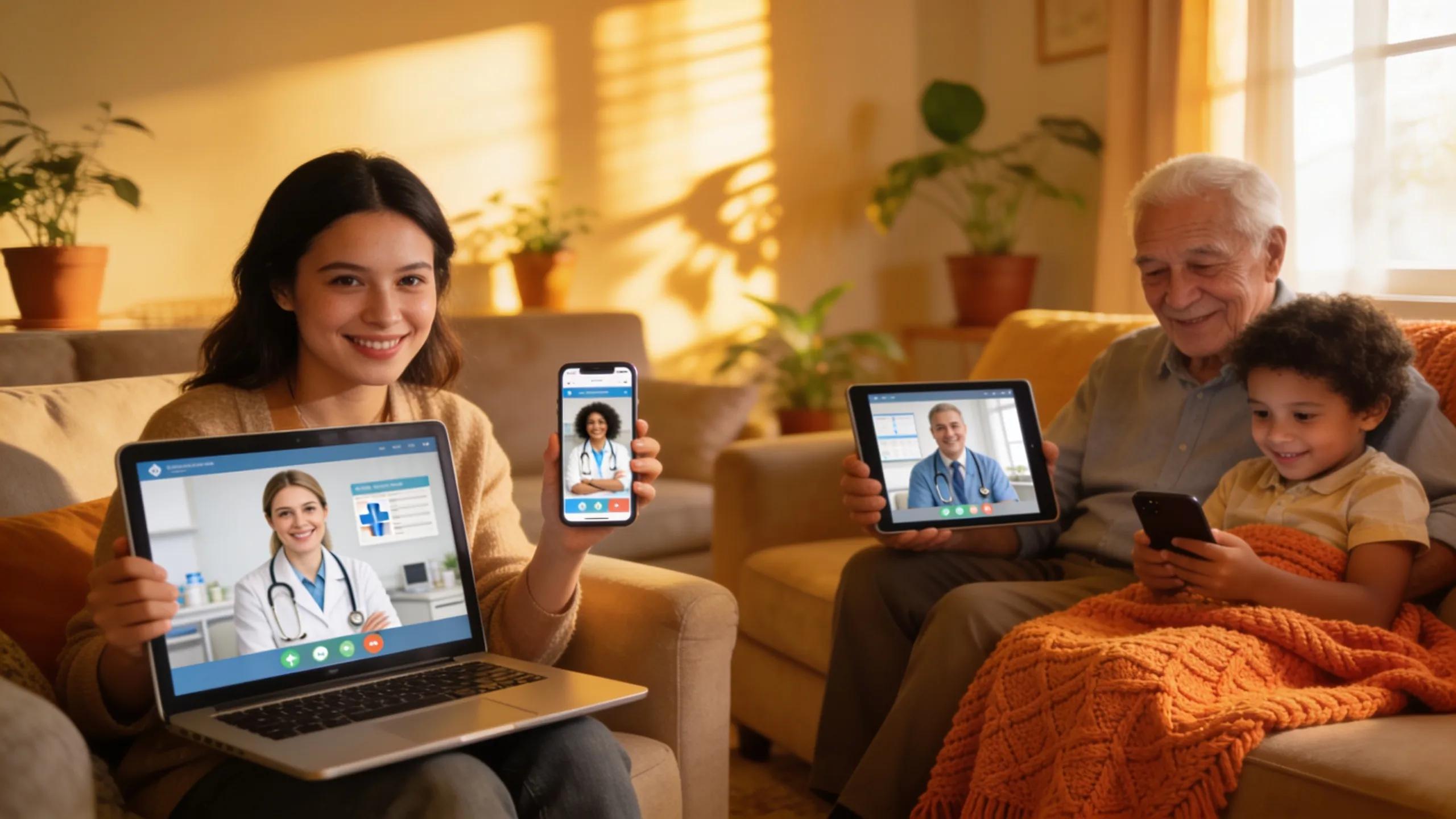
The most common way that telehealth is delivered is via a video chat or phone call, which is called synchronous care. In this model, you connect with an affordable online doctor in real time and communicate in real time, much like you would with an in-person visit.
 ### When to Use Telehealth over Video or Phone
Live consultations are ideal when a clinician needs to visually inspect symptoms (such as throat inflammation, eye redness, or joint swelling), discuss complex medical histories, evaluate mental health concerns, or ask interactive diagnostic questions. This type of communication typically lasts between 10 and 20 minutes.
Telehealth Via Store-and-Forward Questionnaires
The second method, asynchronous care, which is also called "store-and-forward" care, is the cheapest telehealth no insurance option and involves completing a questionnaire that requires you to detail your symptoms, medical history, and current medications. You may also need to upload clear photos of your affected area on a website. A licensed healthcare provider will typically review all of the information you provided within a few hours and send you back a diagnosis, treatment plan, and issue an electronic prescription if medically appropriate.
When Questionnaire Telehealth Works Best
Questionnaire telehealth or asynchronous care typically works for straightforward, routine conditions like minor skin conditions, cold sore flare-ups, seasonal allergy adjustments, and birth control renewals. The reason it's best in simple situations is that you are providing all of your information to a healthcare provider without them seeing you or speaking to you directly.
That means they have to issue a diagnosis based on what you're written down or provided pictures for. If you have an issue that is not routine, the doctor will not be able to issue a diagnosis based on routine symptoms. This is a cheap telehealth option, and typically the cheapest manner in which you can get a consultation from a healthcare professional, with the costs often ranging between $20 and $40.
 What Can Virtual Doctors Treat?
An affordable online doctor has limitations on what he or she can treat, as certain symptoms and conditions require in-person consultations, diagnostics, and imaging. So, while telehealth is a great tool for consulting on routine care needs at a lower price tag, it's not the best solution for all of your health needs.
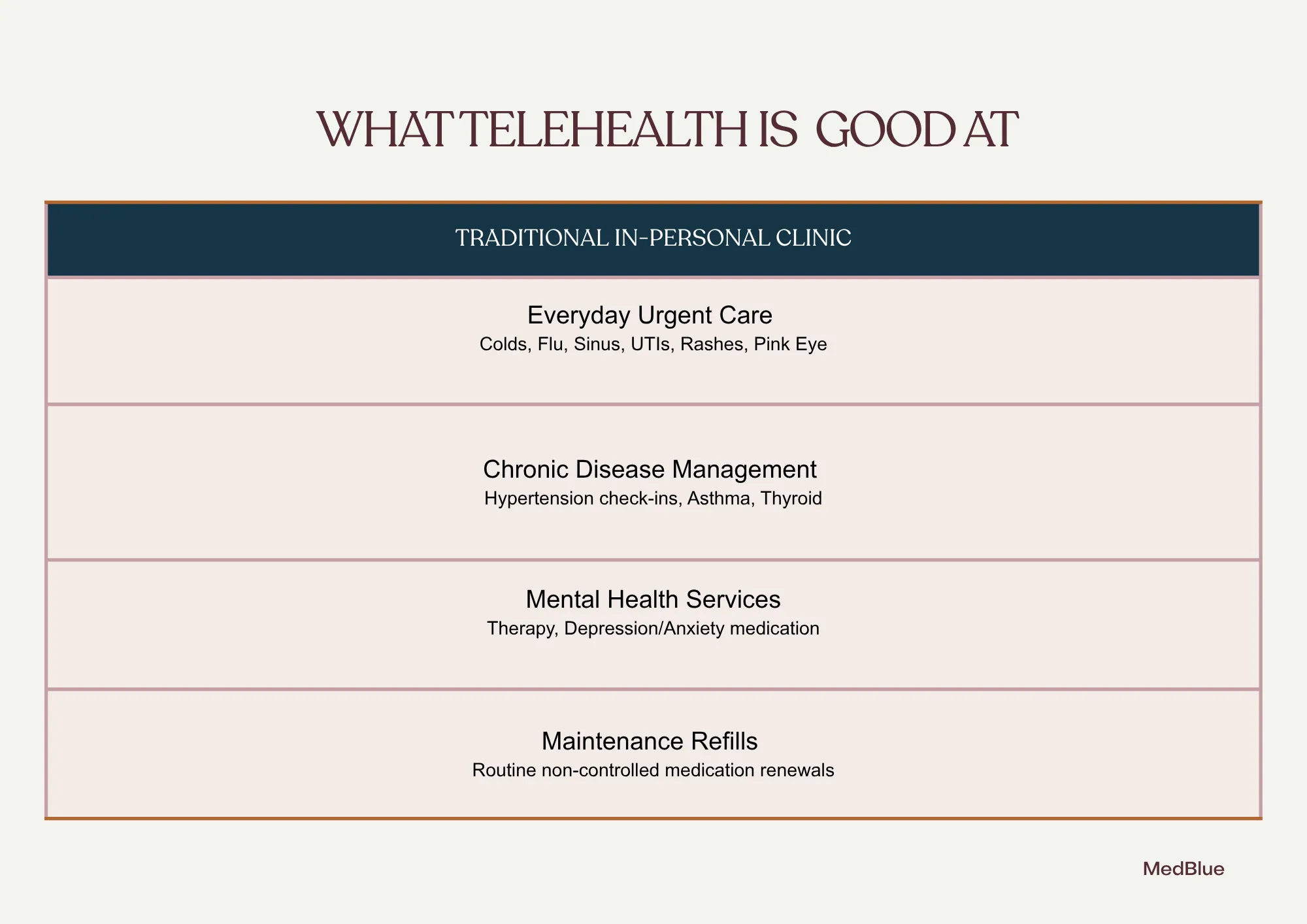
Common Urgent Care & Everyday Ailments
Virtual doctors can evaluate, diagnose, and treat a broad spectrum of non-emergency acute conditions:
Respiratory Issues
Sinus infections (sinusitis), seasonal allergies, bronchitis, common colds, flu symptoms, and mild COVID-19 management.
Infections
Uncomplicated urinary tract infections (UTIs), bacterial vaginosis, yeast infections, and mild skin infections (cellulitis, folliculitis).
Dermatology & Eyes
Acne, eczema, contact dermatitis, poison ivy, cold sores, shingles, and conjunctivitis (pink eye).
Digestive Issues
Mild acid reflux (GERD), upset stomach, travelers' diarrhea, and nausea.
Chronic Condition Management & Maintenance
If you manage an ongoing condition but lack insurance coverage for routine office visits, telehealth providers can bridge the gap by reviewing home health readings and authorizing maintenance refills:
- Hypertension (High Blood Pressure): Reviewing home blood pressure logs and adjusting maintenance medications (such as lisinopril or amlodipine).
- Asthma: Evaluating peak flow logs, assessing inhaler usage, and renewing controller or rescue inhalers.
- Thyroid Disorders: Reviewing recent lab panels and adjusting levothyroxine dosages.
- Type 2 Diabetes: Reviewing blood glucose tracking, dietary plans, and non-insulin medication management (e.g., metformin).
Mental Health & Talk Therapy
Mental healthcare has flourished in the virtual space. Patients can access licensed professional counselors, clinical social workers, psychologists, and psychiatrists without stepping into an office:
- Psychotherapy: Weekly or bi-weekly cognitive behavioral therapy (CBT) and supportive counseling for stress, grief, relationship challenges, and life transitions.
- Psychiatric Consultations: Evaluations for clinical depression, generalized anxiety disorder, OCD, and PTSD, alongside non-controlled medication management (such as SSRIs and SNRIs).
When You Shouldn't Use Telehealth
Telehealth is designed for non-emergency medical needs. If you have an emergency situation, you should seek in-person emergency care. Instances when you should seek emergency care include the following:
-
Sudden chest pain, pressure, or tightness radiating to the arm or jaw.
-
Severe shortness of breath or sudden difficulty breathing.
-
Sudden numbness, weakness, facial drooping, or speech difficulty (signs of stroke).
-
Deep lacerations requiring stitches, open bone fractures, or uncontrolled bleeding.
-
Severe, sudden abdominal pain accompanied by high fever or vomiting.
-
Suicidal thoughts or acute psychiatric crises (Dial or text 988 for immediate support).
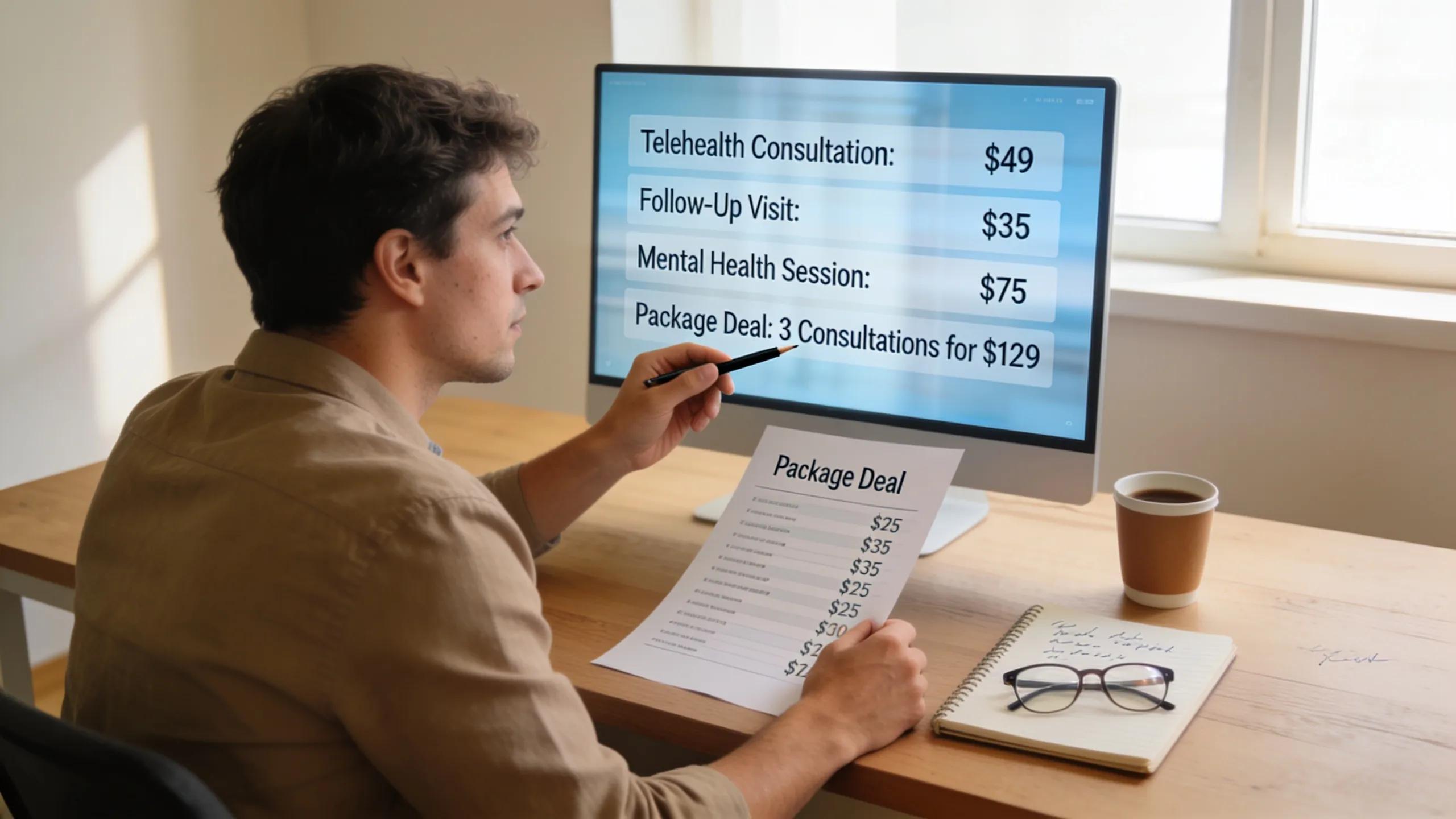
What Are Types of Telehealth Pricing Models
So, if you want to be able to access telehealth without insurance, how do you do it? There are a variety of telehealth models you can look at depending on the best economical option for you.
Pay-Per-Visit
One of the options you have is to pay each time you use telehealth. So you can sign up on a platform like Sesame Health or GoodRx Care, and you pay for each appointment out of pocket.
Subscription Healthcare
Subscription healthcare is a model in which you subscribe to a program and pay a monthly or annual fee. This type of model includes telehealth, but also discounted access to a range of health services like in-person doctor's visits, prescriptions, X-rays, and more.
In this model, you pay a fixed monthly or annual fee for the subscription as you would pay for a streaming service. So, you might pay a fee like $50 a month for the subscription, which then gives you discounts on a range of health services and telehealth.
For example, MedBlue provides a discounted health subscription service starting at $40 a month that includes free telehealth as well as discounts on a range of health services like dental visits, MRIs, X-rays, eyecare, and more.
Community Health Centers & Sliding-Scale Virtual Clinics
The most cheap telehealth option to access telehealth can be through Federally Qualified Health Centers (FQHCs). FQHCs are community-based clinics funded by the federal government that provide comprehensive primary and preventive care regardless of a patient's insurance status or ability to pay. The vast majority of FQHCs now operate virtual telehealth portals alongside their physical clinics. Fees are calculated on a sliding-fee scale based on your household size and income, meaning an online appointment could cost as little as $0 to $20 if your income qualifies.
Healthcare Ministries
Healthcare ministries are usually faith-based and provide a different payment model than the above, and some of them provide telehealth. You can join a healthcare ministry by paying a monthly or annual fee, and all of the funds paid by members are put into a pool.
Each healthcare ministry has its own structure, and so they decide which type of healthcare the community will cover from the pool, and which you have to pay yourself. Members often pay for basic care, and more serious issues are covered by the community pool. You will need to check with the health ministry to determine if they provide telehealth.
How to Use Telehealth for Prescriptions
A telehealth appointment is much like an in-person doctor's appointment, and that means the doctor may need to prescribe you medication for your medical issue. In most jurisdictions, your virtual doctor will be able to provide you with a prescription electronically that they can send to your choice of pharmacy. Virtual doctors cannot prescribe controlled substances, including stimulants like Adderall or anxiety medications like Xanax or opioid pain relievers like Oxycodone.
How to Prepare for a Virtual Doctor Visit
You want to give your virtual doctor as much information as possible to provide you with the most accurate diagnosis. Keep the following things in mind when preparing for your telehealth visit.
- Create a list of medications you take and allergies you have.
- Document Your Symptom Timeline: Note exactly when your symptoms began, how they have progressed, what makes them better or worse, and what home remedies or OTC medications you have already tried.
- Make sure to shoot photos of your issue like an eye irritation or skin problem in good lighting so your health professional is able to get the clearest picture possible.
- Create a log of vital signs like thermometer readings or blood pressure if you are able to monitor those things at home.
- Make sure your technology is working prior to your appointment so you don't end up missing it due to a technical issue.
MedBlue Telehealth for Uninsured and Underinsured Individuals
MedBlue is a discount payment plan (DPP), which is not a replacement for insurance, but rather an insurance alternative. You can pay a monthly fee starting at $40 for access to a variety of discount health services like doctor's visits, dental visits, eye care, X-rays, MRIs, and free 24/7 telehealth.
If you are interested in learning more about how you can access MedBlue's plan, visit the pricing page, or you can connect with one of our client care specialists to discuss your questions.
FAQs
Here are some frequently asked questions pertaining to telehealth.
Can online doctors write official work or school excuse notes?
Yes. Most general urgent care telehealth platforms can provide signed, verifiable medical absence notes for work or school if the clinician determines your condition warrants rest or recovery time. Be sure to request the excuse note during your visit so the doctor can attach the digital PDF to your consultation summary.
Can a telehealth provider prescribe controlled substances?
Due to strict federal and state regulations, virtual medical providers cannot prescribe Schedule II–V controlled substances (including medications like Adderall, Ritalin, Xanax, Klonopin, Ativan, Ambien, or opioid pain relievers). If you require these specific medications, you must be evaluated in person by a licensed physician or psychiatrist.
What happens if the doctor decides I need an in-person exam during the call?
If a virtual doctor looks at your symptoms and decides that the virtual visit is not adequate, they will tell you to seek in-person care. Many reputable platforms maintain clinical refund policies or reduce the consultation fee if they are unable to treat you due to safety limitations.
Are Online Doctors Licensed to Provide Care Across States?
Online doctors must be licensed in the state where their patient is located at the time of the consultation. Many telehealth platforms ensure that their providers meet state licensing requirements to avoid legal issues. This can vary widely across states, so verifying a doctor’s credentials and state compliance is essential for receiving valid medical care.
How Do Telehealth Regulations Affect Uninsured Patients’ Access?
Telehealth regulations can significantly influence the availability of services for uninsured patients. Some states have enacted more flexible regulations that enhance access, while others maintain stricter rules that could limit options. Understanding these regulations helps patients better navigate their choices and ensures they can access the necessary telehealth services.
What Are the Benefits of Using Telehealth Services Without Traditional Insurance?
If you don't have traditional insurance, telehealth can help you reduce costs for out-of-pocket healthcare expenses like doctor's appointments. With telehealth, you can also get care pretty quickly, with appointment access often available on the same day. And, you don't need any insurance verifications before you get care.